
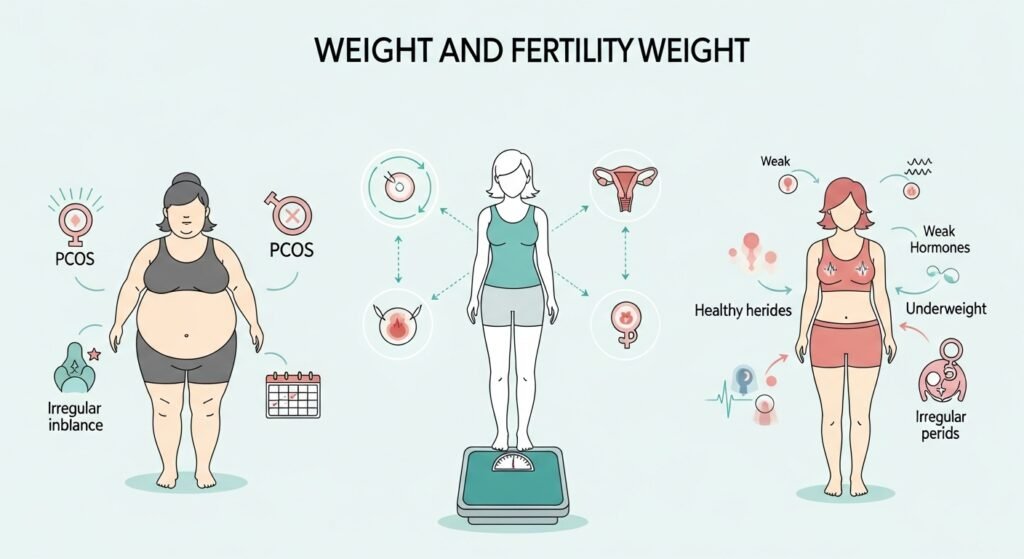
The weight and fertility connection in women is an important topic for couples trying to conceive. In fact, body weight can directly influence hormonal balance, ovulation, and reproductive health. Therefore, maintaining a healthy weight is essential for improving fertility naturally.
Many women do not realize that both being overweight and underweight can affect their chances of pregnancy. As a result, understanding the weight and fertility connection in women can help couples take the right steps toward better reproductive health.
How Weight Affects Fertility in Women
First of all, hormones play a major role in ovulation and menstrual cycles. However, when body weight is too high or too low, hormone production may become unbalanced.
For example, excess body fat can increase estrogen levels. Consequently, this hormonal imbalance can disturb the ovulation cycle. Similarly, women who are underweight may produce fewer reproductive hormones. Because of this, ovulation may stop or become irregular.
Therefore, the weight and fertility connection in women clearly shows how important a balanced body weight is for reproductive health.
Overweight and Fertility Problems
In many cases, overweight women may experience fertility issues. Moreover, excess body weight can affect egg quality and hormone levels.
Some common problems include:
- Irregular menstrual cycles
- Ovulation disorders
- Higher risk of PCOS
- Hormonal imbalance
- Reduced chances of natural conception
As a result, doctors often explain the weight and fertility connection in women when guiding patients about lifestyle improvements.
Underweight and Fertility Challenges
On the other hand, being underweight can also affect fertility. In fact, women with very low body fat may experience irregular periods or missed cycles.
For instance, insufficient body fat may reduce estrogen production. Consequently, the body may not release eggs regularly.
Because of this, the weight and fertility connection in women highlights the importance of maintaining a healthy and balanced weight.
Improving Fertility with Healthy Weight
Fortunately, simple lifestyle changes can support fertility. In addition, maintaining a balanced diet and active lifestyle can improve reproductive health.
Here are some helpful tips:
- Eat a balanced and nutritious diet
- Exercise regularly but moderately
- Maintain a healthy BMI
- Reduce stress levels
- Avoid excessive processed foods
By following these steps, many women can improve their fertility naturally. Therefore, understanding the weight and fertility connection in women becomes very helpful for couples planning pregnancy.
Ayurvedic View on Weight and Fertility
According to Ayurveda, fertility depends on balanced doshas and strong reproductive tissues. Furthermore, improper diet and lifestyle may disturb this balance.
For example, excess weight may increase Kapha imbalance, while very low weight may weaken body tissues. Consequently, Ayurveda focuses on restoring balance through herbal support, detox therapies, and healthy lifestyle practices.
Thus, the weight and fertility connection in women can also be addressed through natural Ayurvedic treatment.
Conclusion
In conclusion, the weight and fertility connection in women plays a major role in reproductive health. Both overweight and underweight conditions can affect hormonal balance and ovulation.
However, with proper diet, healthy lifestyle choices, and natural treatments, many women can improve fertility. Therefore, maintaining a healthy weight is one of the most important steps for achieving a successful pregnancy.