
Introduction
Low AMH Treatment is one of the most searched fertility topics among women who are struggling to conceive. If you have been diagnosed with low Anti-Müllerian Hormone (AMH) levels, you may be concerned about your chances of pregnancy. However, low AMH does not mean that motherhood is impossible. In fact, many women with low ovarian reserve successfully conceive with the right fertility care and lifestyle changes. Therefore, understanding the causes, symptoms, and available Low AMH Treatment options can help you take the right steps toward improving your fertility and achieving a healthy pregnancy.
What is Low AMH and Why is Low AMH Treatment Important?
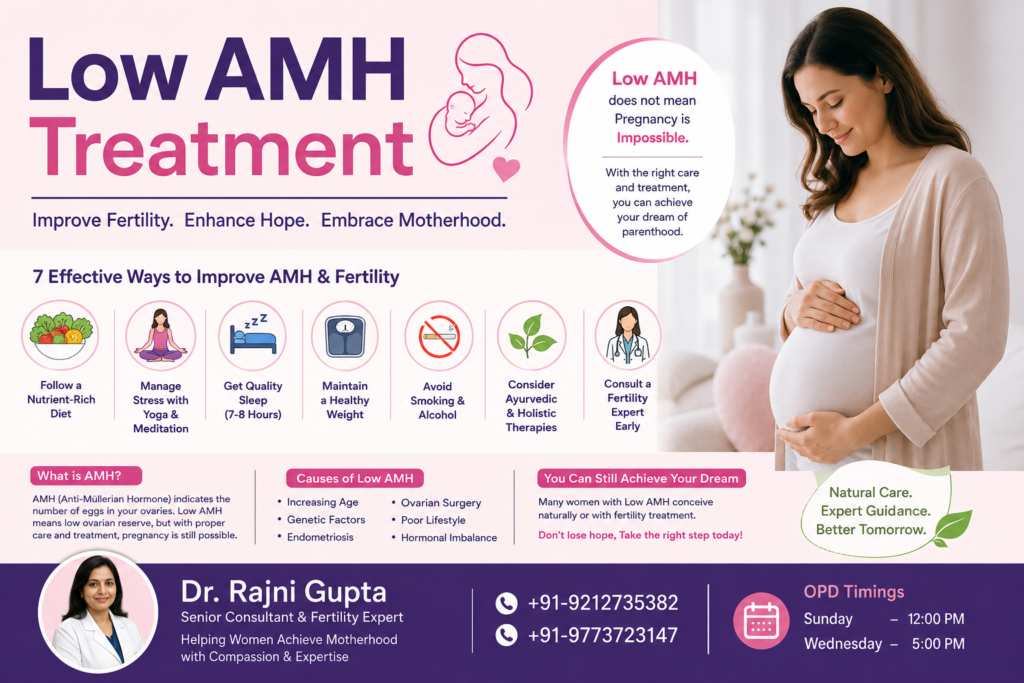
AMH, or Anti-Müllerian Hormone, is produced by small follicles in the ovaries. It helps assess a woman’s ovarian reserve. In other words, it provides information about the number of eggs remaining in the ovaries. However, AMH does not determine egg quality. Therefore, even women with Low AMH may still have healthy eggs capable of achieving pregnancy.
Common Causes That May Require Low AMH Treatment
Several factors can contribute to Low AMH levels.
1. Age-Related Factors and Low AMH Treatment
As women grow older, ovarian reserve naturally declines. Consequently, AMH levels tend to decrease over time.
2. Genetic Factors Affecting Low AMH Treatment
Some women inherit a lower ovarian reserve. Therefore, they may experience Low AMH at a younger age.
3. Endometriosis and Low AMH Treatment
Endometriosis can affect ovarian function. As a result, AMH levels may become lower than expected.
4. Ovarian Surgery
Previous ovarian surgeries may reduce the number of follicles. Consequently, ovarian reserve may decrease.
5. Lifestyle Factors That Impact Low AMH Treatment
Smoking, poor nutrition, chronic stress, and lack of sleep can negatively impact reproductive health. Furthermore, these factors may affect overall fertility potential.
Symptoms of Low AMH
Low AMH often has no obvious symptoms. However, some women may experience fertility-related concerns.
These may include:
- Difficulty conceiving
- Irregular menstrual cycles
- Reduced fertility with age
- Poor response to IVF treatment
Therefore, fertility testing is often necessary to identify Low AMH.
Can You Get Pregnant with Low AMH?
Yes, pregnancy is still possible. Although Low AMH indicates fewer eggs, it does not necessarily mean poor egg quality. Moreover, many women with Low AMH conceive naturally. In addition, assisted reproductive techniques can further improve pregnancy chances. Therefore, a Low AMH diagnosis should not be viewed as the end of your fertility journey.
7 Effective Low AMH Treatment Options
1. Follow a Fertility-Friendly Diet
A healthy diet supports reproductive health. Therefore, include fruits, vegetables, nuts, seeds, whole grains, and lean proteins in your daily meals. Furthermore, antioxidant-rich foods may help protect reproductive cells from oxidative stress.
2. Maintain a Healthy Weight
Body weight plays an important role in hormonal balance. Consequently, maintaining a healthy BMI may improve fertility outcomes.
3. Manage Stress
Stress can affect hormonal health. Therefore, practices such as yoga, meditation, and mindfulness may be beneficial. Moreover, reducing stress can improve overall well-being.
4. Prioritize Quality Sleep
Adequate sleep supports hormone regulation. Therefore, aim for 7–8 hours of quality sleep every night.
5. Avoid Smoking and Alcohol
Smoking may accelerate ovarian aging. Similarly, excessive alcohol consumption can negatively affect fertility. Therefore, limiting these habits is highly recommended.
6. Consider Holistic Fertility Support
Certain fertility-supportive approaches, including lifestyle modification, reproductive wellness programs, and personalized Ayurvedic care, may support overall reproductive health. Furthermore, these approaches can complement conventional fertility treatment when guided by experts.
7. Consult a Fertility Expert Early
Early intervention is extremely important. Therefore, if you have been diagnosed with Low AMH, seek professional advice as soon as possible. As a result, you can receive a personalized treatment plan that addresses your specific fertility needs.
Conclusion
A Low AMH diagnosis can be challenging. However, it does not mean that motherhood is out of reach. By adopting a healthy lifestyle, seeking expert guidance, and pursuing appropriate fertility treatment, many women successfully achieve pregnancy. Therefore, taking action early can make a significant difference. Ultimately, the right support and treatment strategy can help you move closer to your dream of becoming a parent.